
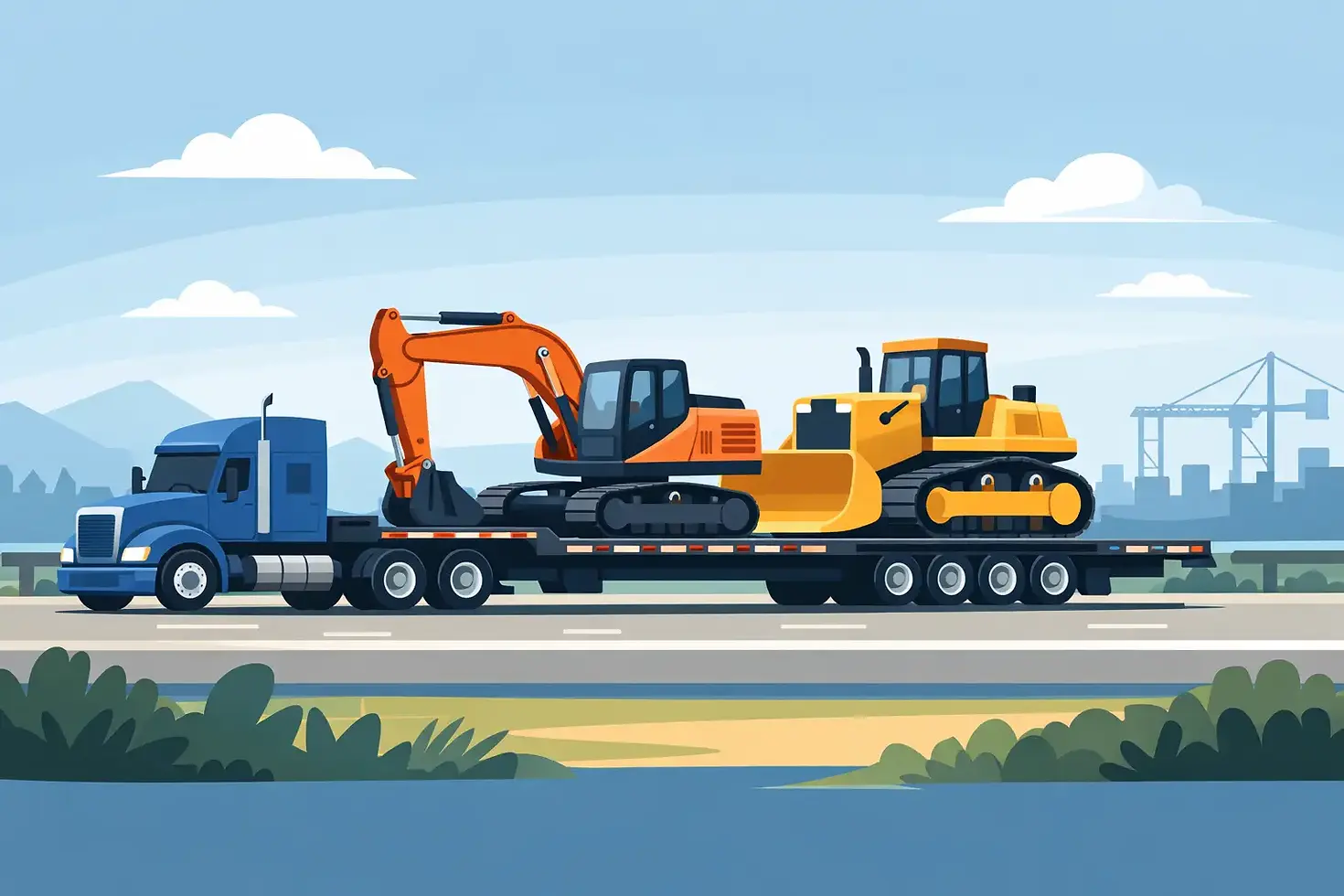
Flatbed Equipment Transport for Heavy Loads

A stalled excavator at the wrong job site can idle an entire crew. A work truck with a mechanical issue can leave a delivery route uncovered. Flatbed equipment transport is the practical answer when equipment needs to move safely, on schedule, and without adding damage or downtime to an already expensive problem.
For contractors, fleet managers, owner-operators, and equipment owners, the transport itself is not just another line item. It is the step that keeps a project moving, returns a disabled vehicle to service, or gets a newly purchased machine where it needs to work. The right plan starts before the trailer arrives.
What Flatbed Equipment Transport Is Built to Handle
A flatbed provides an open deck that can accommodate loads that are difficult or impossible to place in an enclosed trailer. Depending on the trailer configuration, it can be used for construction equipment, forklifts, skid steers, compactors, generators, industrial machinery, work trucks, lifts, attachments, and other commercial assets.
The main advantage is access. Equipment can be loaded from the rear with ramps, lifted onto the deck, or positioned with recovery equipment when it cannot move under its own power. That matters when a machine has a dead battery, drivetrain failure, tire damage, accident damage, or has been sitting in soft ground at a job site.
Open-deck transport also creates responsibilities. The load is exposed to weather and road conditions, so proper placement and securement are not optional. A professional operator evaluates the equipment's dimensions, weight, ground clearance, center of gravity, and running condition before deciding how to load it.
Start With the Equipment Details That Affect the Move
A fast dispatch is more useful when the transport provider has accurate information from the start. Before scheduling transport, have the equipment make, model, approximate weight, overall width, height, and length available. If you do not have every measurement, provide the model number and clear photos from several angles.
Also explain whether the unit runs, steers, brakes, and rolls freely. A running skid steer on firm, level ground is a different job from a disabled boom lift with locked wheels or a work truck that cannot be driven. That information determines whether the move requires ramps, a winch, recovery support, additional labor, or a different trailer setup.
Location conditions matter just as much. Tell the dispatcher whether the equipment is at a roadside, inside a construction site, in a parking garage, on a narrow residential street, or behind a gated property. Soft shoulders, low tree limbs, mud, traffic, tight turns, and limited access can all affect how a truck approaches and loads the unit.
For oversized equipment, dimensions are especially important. A machine may fit on a deck but still require route planning, permits, escort considerations, or a specialized trailer due to its height, width, or weight. Trying to treat an oversize move like a standard haul can create delays that should have been addressed before loading.
The Difference Between Transport and Recovery
Not every equipment move begins as a scheduled transport. Sometimes the call starts with a breakdown, collision, rollover, stuck vehicle, or job-site immobilization. In those cases, recovery comes first.
Recovery work focuses on stabilizing the situation, protecting the equipment, and getting it into a position where it can be loaded safely. Transport begins once the unit is ready to travel. Combining those steps under one capable provider can reduce handoffs and prevent a damaged or disabled machine from being moved with the wrong equipment.
Loading Is Where Safety and Equipment Protection Meet
Loading heavy equipment is not simply a matter of driving it onto a trailer. The operator must account for approach angle, deck height, ramp capacity, wheelbase or track length, and the location of the heaviest components. A load positioned too far forward, too far back, or too high can affect handling and axle weights.
Machines with low ground clearance may need a controlled loading angle to avoid scraping or getting hung up at the ramps. Equipment with tracks needs a deck and loading approach that can support its contact points. Vehicles with damaged steering or locked brakes may require winching and careful guidance rather than a standard drive-on load.
Once on the deck, the equipment must be secured at proper tie-down points. Chains, binders, straps, wheel restraints, and other securement methods are selected based on the load and the applicable requirements. The goal is not merely to keep the unit from falling off the trailer. It is to prevent shifting, bouncing, or movement that can damage the machine, trailer, or surrounding traffic.
Attachments deserve the same attention as the main machine. Buckets, forks, booms, blades, and loose accessories can change the equipment's dimensions and center of gravity. Some can travel in place when secured correctly; others should be removed or transported separately. The right choice depends on the equipment, route, and manufacturer guidance.
Choose a Transport Plan That Fits the Job
The lowest quote is not always the lowest cost. A provider without the right capacity may arrive late, require a second truck, or create avoidable loading delays. A better decision considers the equipment type, operating condition, pickup environment, delivery deadline, and level of urgency.
For a planned move between job sites, schedule as early as possible and coordinate with both locations. Confirm site access, contact names, gate instructions, unloading space, and the person authorized to receive the equipment. If the delivery site is not ready, a loaded truck may have to wait or return later, adding time and cost.
For an emergency, speed matters, but clear details still help. Share your exact location, the condition of the unit, any hazards, and whether the equipment is blocking traffic or creating a safety issue. If a disabled truck or machine is in a dangerous position, stay clear of traffic and follow instructions from emergency personnel while waiting for help.
In Southwest Florida, weather and site conditions can change quickly. Heavy rain can turn an accessible job site into soft ground, while heat and humidity can add stress to equipment already experiencing mechanical trouble. A transport plan that accounts for access conditions is often what separates a clean move from a costly delay.
Protect the Schedule Before the Truck Arrives
The person responsible for the equipment can make loading faster by preparing the site and the machine. Clear a path wide enough for the transport truck to enter, turn, and position safely. Move smaller vehicles, pallets, materials, and loose debris away from the loading area. If there are overhead lines, low branches, or restricted gates, identify them before dispatch.
For operating equipment, secure loose items, lower attachments as directed, and make sure the unit is ready for transport. Remove personal tools and valuables from work trucks or cabs when appropriate. For a disabled unit, do not attempt improvised repairs or unsafe pulling methods just to make it easier to load. A damaged machine can become more difficult and expensive to recover when it is moved incorrectly.
Documentation can also save time. Keep purchase records, serial numbers, site contacts, and delivery instructions available, especially when equipment is being transferred between contractors, rental locations, repair facilities, or multiple job sites. If the load has unusual handling requirements, communicate them directly instead of assuming the operator will see them at pickup.
When You Need a Provider Ready to Respond
The right transport partner brings more than a trailer. They bring the judgment to assess a disabled or oversized load, the equipment to load it correctly, and the discipline to secure it for the road. That is particularly valuable when a breakdown turns a normal workday into an urgent recovery situation.
YRCM Transport & Towing provides scheduled and urgent equipment moves with the responsive support commercial operators need day or night. Whether the equipment is moving across town, headed to a repair facility, or traveling farther across Florida, the priority remains the same: protect the load, keep people safe, and reduce the time your operation is waiting.
When equipment has to move, accurate information and professional handling make the next step simpler. Have the machine details, site conditions, and destination ready, then get the right truck dispatched for the job.


Comments