
Top Fleet Emergency Readiness Steps That Work

A loaded work truck on the shoulder at 2:00 a.m. is not just a maintenance issue. It is a safety exposure, a missed delivery, a frustrated customer, and potentially a stopped job site. The top fleet emergency readiness steps give drivers and managers a clear playbook for protecting people first, securing the vehicle, and getting the right recovery support moving without delay.
For fleets across Southwest Florida, preparation has to account for more than a flat tire. Heat, heavy rain, construction traffic, long routes, oversized loads, and crowded highway shoulders can turn a manageable breakdown into a serious incident quickly. The goal is not to prevent every roadside emergency. It is to make sure your team knows exactly what to do when one happens.
Start With a Driver-First Emergency Plan
A fleet plan only works if a driver can follow it under pressure. Keep the process simple enough to use in poor weather, low light, or the middle of a busy shift. Every driver should know who to call, what information dispatch needs, and when not to attempt a roadside repair.
The first decision is always about immediate danger. If the vehicle can be moved safely, the driver should get it out of traffic and into the safest available location. If it cannot be moved, they should turn on hazard lights, set warning devices when conditions allow, and stay clear of active lanes. A driver should never work beneath a disabled truck or attempt a repair where passing traffic creates a serious risk.
Your written procedure should also make clear when emergency services come before towing. Injuries, fuel leaks, fire, blocked lanes, unstable cargo, and collisions require a different response than a mechanical breakdown in a safe parking area. There is no value in saving a few minutes if the scene is not secure.
Give Dispatch the Details That Matter
The faster a recovery provider understands the situation, the faster they can send equipment that fits the job. Drivers should be trained to report the exact location, truck type, load condition, whether the vehicle is loaded or empty, visible damage, and any hazards at the scene.
A vague report such as “truck broke down near Naples” wastes valuable time. A useful report identifies the road, direction of travel, nearest mile marker or cross street, vehicle size, and whether the truck is blocking traffic. Photos can help when it is safe to take them, particularly after a collision or when equipment is stuck, rolled, or off pavement.
Top Fleet Emergency Readiness Steps for Every Vehicle
A dependable response starts before the truck leaves the yard. Drivers should inspect emergency supplies as part of their routine vehicle checks, not after something goes wrong. Equipment that is missing, damaged, or buried under cargo will not help during an actual roadside event.
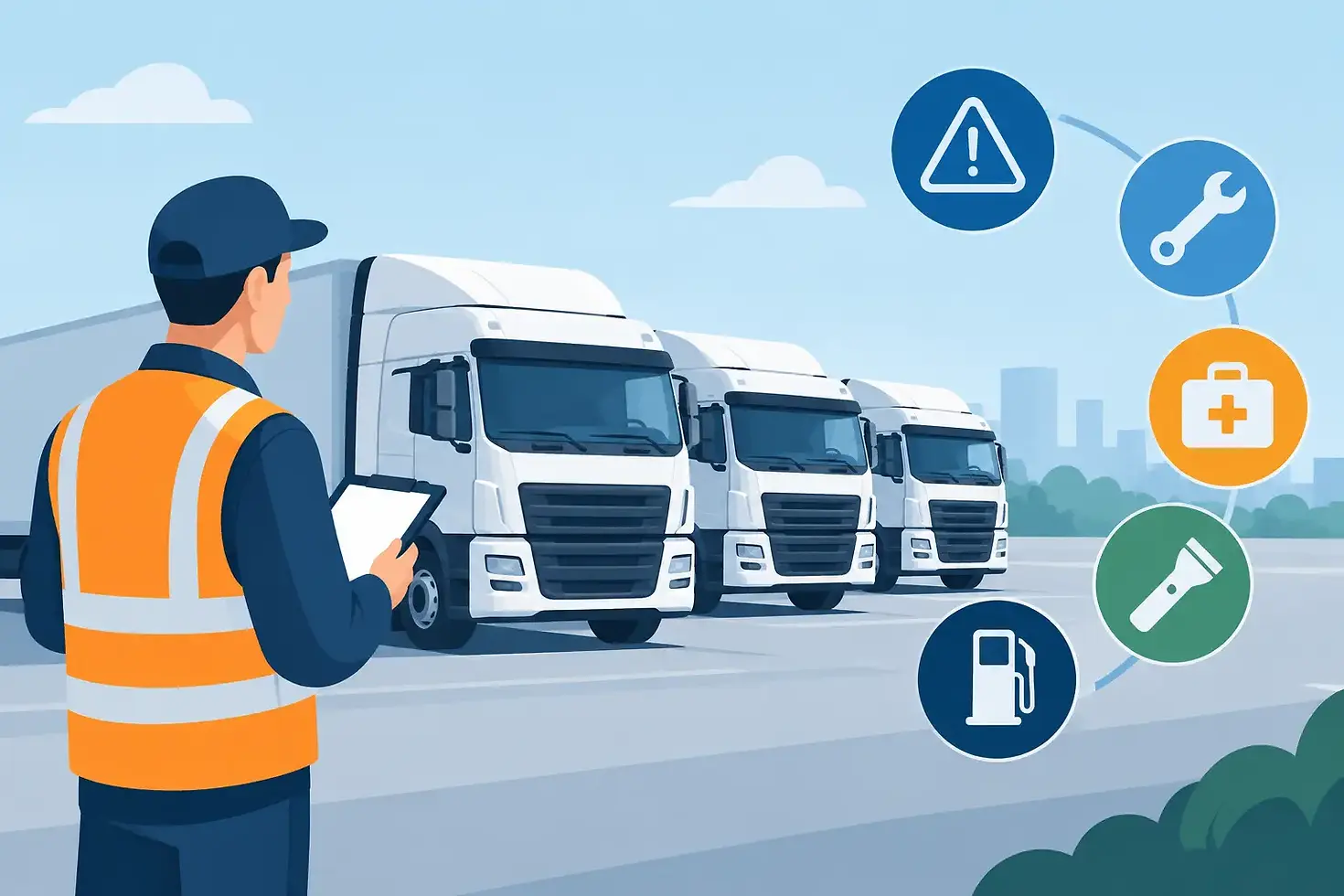
Each fleet vehicle should carry these basic emergency items:
High-visibility vest, gloves, flashlight, spare batteries, and rain gear
Reflective triangles or other required warning devices
Charged phone or backup power source for contacting dispatch and recovery
First-aid kit, fire extinguisher, and basic spill-control materials where appropriate
Current insurance, registration, load information, and emergency contact instructions
The exact kit depends on the vehicle and route. A local service truck may need a different setup than a tractor-trailer carrying construction materials or hauling equipment across Florida. Review the kit after use and on a set monthly schedule. A dead flashlight or empty first-aid kit is easy to overlook until it is needed.
Build a Clear Escalation Chain
Drivers need one reliable number to call and a clear order of operations. They should not have to guess whether to contact a supervisor, maintenance, insurance, law enforcement, or a towing company first. That uncertainty creates delays and can lead to conflicting instructions.
For most non-injury breakdowns, the driver should first secure the vehicle, contact fleet dispatch, and provide the details needed to arrange service. Dispatch can then notify the customer, reroute work if necessary, document the issue, and coordinate repair or towing. For urgent recovery situations, dispatch should be authorized to call a qualified heavy-duty towing provider immediately rather than waiting through several approval steps.
This matters especially for commercial trucks, buses, box trucks, and equipment trailers. A standard roadside assistance vendor may not have the wheel-lift capacity, winching equipment, or recovery experience required for a loaded or disabled heavy vehicle. Calling the wrong provider can turn one delay into two.
Preapprove the Right Recovery Partners
Do not wait for an incident to learn whether a towing company can handle your fleet. Verify in advance that your provider can respond day or night, has experience with your vehicle classes, and understands safe recovery around commercial traffic and job sites.
Ask practical questions. Can they move loaded trucks? Do they provide winching and accident recovery? Can they transport equipment when a trailer fails? What details do they need before dispatching? Establishing those expectations ahead of time helps your team make one confident call when a truck is down.
For businesses operating around Naples, Fort Myers, Lee County, and Collier County, local response knowledge can make a real difference. A provider familiar with the area's routes, construction corridors, and heavy-traffic periods can get to the scene and plan the tow with fewer surprises.
Train for Real Scenarios, Not Just Paperwork
Emergency instructions that sit in a binder do not protect anyone. Short, repeated training works better. Use safety meetings to walk drivers through likely situations: a blown tire on a high-speed road, a truck that will not restart at a customer location, a loaded trailer with brake trouble, or equipment that sinks into soft ground at a job site.
Focus training on judgment. Drivers need to know when they can safely inspect a problem and when the right move is to step away, secure the area, and wait for professional help. They should also understand that a quick fix is not always the low-cost option. Improper towing points, rushed winching, or an untrained attempt to free stuck equipment can cause expensive damage and increase downtime.
Run tabletop drills with office staff as well. Dispatchers should practice collecting location details, determining the severity of the event, contacting customers, and recording actions taken. After an actual incident, review what worked and where communication slowed down. That review is where a basic emergency plan becomes a reliable operating system.
Protect the Load, the Scene, and the Evidence
Fleet emergencies often involve more than the truck. A shift in cargo, exposed equipment, damaged tie-downs, or a compromised trailer can create new hazards after the vehicle stops. Drivers should not adjust a load beside moving traffic unless they can do so safely and are trained for the task.
Document the condition of the vehicle and cargo before recovery when possible. Time-stamped photos, driver notes, and dispatch records can help with maintenance decisions, customer communication, insurance claims, and incident reporting. Documentation should be factual. Record what happened, where it happened, the weather and road conditions, visible damage, and the actions taken.
In a crash or recovery involving another party, avoid assigning blame at the scene. Cooperate with law enforcement, protect the area, and let the proper reports and evidence guide the next steps.
Use Maintenance Data to Reduce Repeat Emergencies
Emergency readiness is not separate from preventive maintenance. Breakdowns reveal patterns. If several trucks experience the same battery issue, tire failure, cooling problem, or trailer-light fault, the fleet needs to address the cause instead of treating each roadside stop as a one-off event.
Track the type of failure, vehicle number, mileage, route, repair performed, recovery cost, and downtime. A smaller fleet can manage this with a simple shared log. Larger operations may use fleet software. Either way, the objective is the same: spot recurring problems early enough to keep them from stranding another driver.
There are trade-offs. Keeping extra parts, backup vehicles, and more detailed inspection schedules costs money. But a vehicle that goes down during a critical delivery or leaves equipment stuck at a job site can cost much more in lost labor, missed commitments, and emergency recovery.
A fleet does not need a complicated plan to be ready. It needs trained drivers, usable supplies, a decisive dispatch process, and a heavy-duty recovery partner that can respond when the situation is bigger than a roadside repair. When a truck or piece of equipment is down, YRCM Transport & Towing is available 24/7 to help move the response from uncertainty to safe, professional recovery.


Comments